Research
Music Emotion
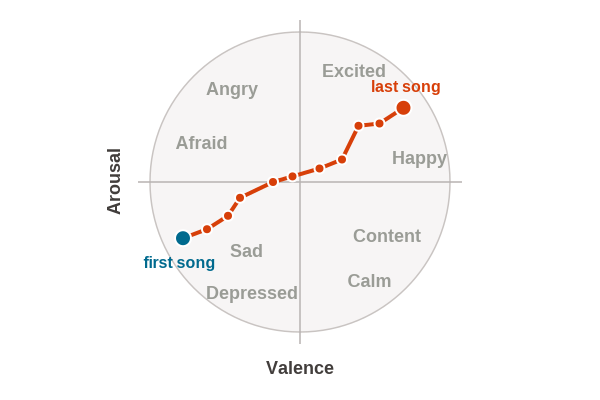
We study the emotions people hear in music and the feelings music evokes. We use audio, listener ratings, and written sources such as concert program notes to build and evaluate models of musical emotion. This work also informs playlists that guide listeners through changes in mood.
Sound Perception
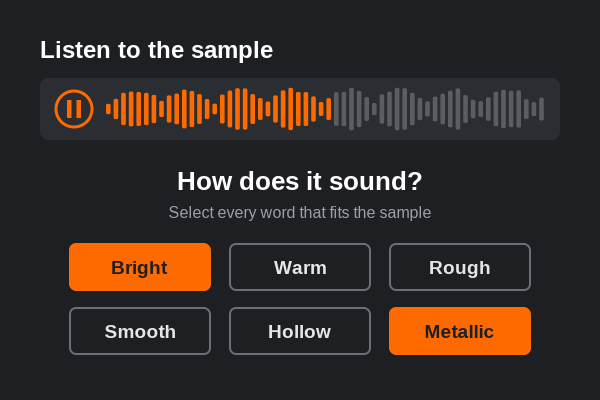
We study how people hear and describe sound, from differences in timbre to the effects of hearing loss. We compare listener judgments with model predictions, use text to train audio classifiers, and build interactive tools that let people explore how hearing loss can change familiar sounds.
Musical Structure
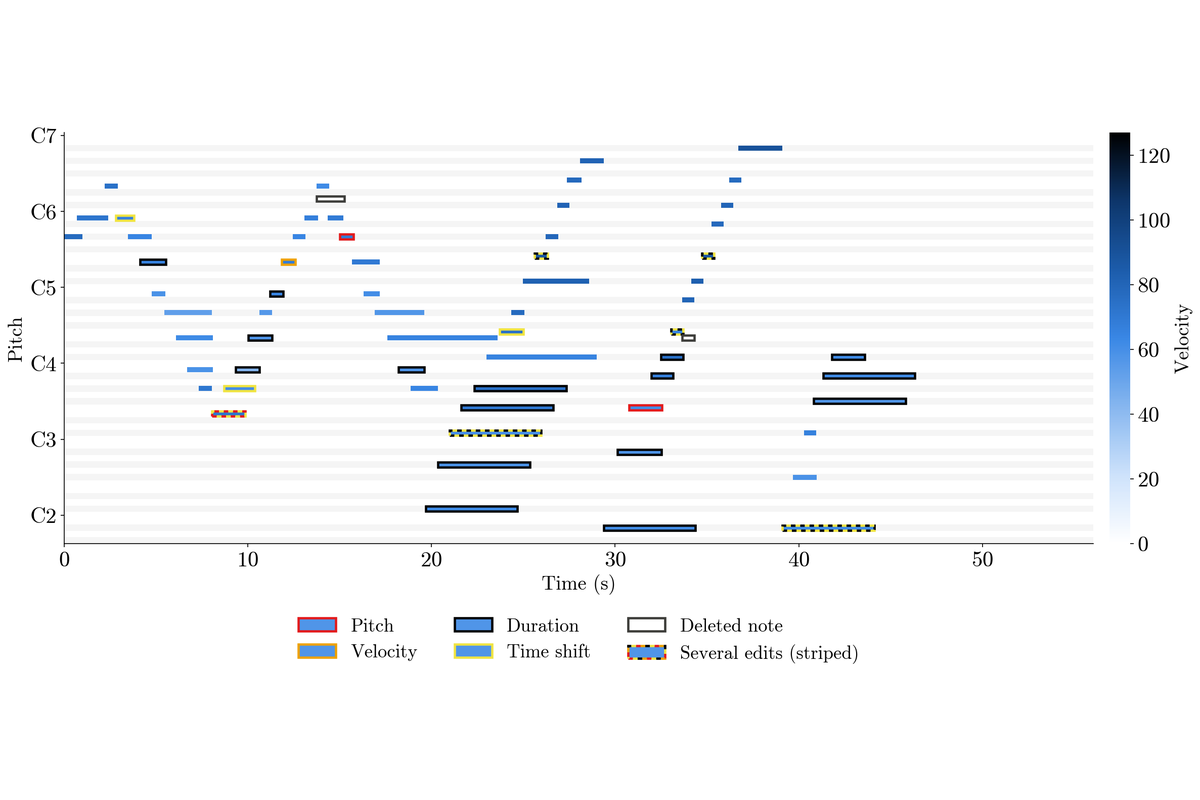
We study how computers recognize, represent, and generate musical structure. We test what generative models learn about rhythm and harmony, build systems that transcribe piano recordings into notes, and create datasets to test these abilities. Our musicology work examines music in its historical context.
Applied Sensing

We use sound, images, and other sensor data to measure changes that can be difficult to observe directly. Our projects detect wildlife calls and seizures in dogs, forecast river levels, and document household food waste. The binsight.ai smart compost bin combines measurements, images, and a companion app.
Datasets, Code & Demos
Synthetic audio examples of rhythm, harmony and other music-theory concepts for probing what generative music models learn.
Cite: Kwan & Donnelly 2026New York Philharmonic program notes from the 1840s on, with estimated emotion scores for music emotion research.
Cite: Khanal & Donnelly 2025Search 32,000 New York Philharmonic program notes (1842–2023) by composer or piece, and see the emotion scores of each note.
Cite: Khanal & Donnelly 2025See how GPT-4o-mini rated the mood of 31,596 Billboard Hot 100 songs (1958–2024), and how its ratings compare with human listeners'.
Project: Brickner 2025Build a playlist that moves smoothly from one song's mood to another's, one step at a time, plotted on the valence–arousal map.
Cite: Gaur & Donnelly 2024Hear hypothesized pronunciations of Proto-Indo-European words and fables, choosing the sound for each disputed phoneme.
Cite: Donnelly 2022